


Learning Objectives
An aim of this blog is to provide a foundational scoping review of various elements related to maritime life, particularly in the Pacific region and the following elements.
- You can potentially develop an understanding of maritime life connected to the Pacific and its broader implications; and,
- Reflect on the roles and potential contributions of countries such as Canada, Australia, India, New Zealand, and Singapore as they navigate critical trade and commercial interests in the Pacific and beyond.
Exploring Aspects of Maritime Life: Should the visual presentation (immediately above) featuring whales, seals, coastal landscapes, and travel content about the Canadian Pacific region stop playing, consider pausing and then resuming. Additionally, you have the options of contacting us and exploring the Pacific region both virtually and in-person.
Topics Covered
Initially, upon reviewing the provided materials, it is anticipated that you will gain a foundational insight into maritime life and the following subjects:
- Human and environmental challenges;
- Trade, defence and security; and,
- Economic freedoms.

subject to certain limitations. Posner (2014) posited that modern human rights were not distinctive until the 18th Century with the Enlightenment.
Exploring Aspects of Maritime Life: From the Pacific to the Arctic Regions
This blog focuses on aspects of maritime life, including in the Pacific region, where nations encounter distinct challenges that heighten their vulnerability to global disruptions. Geopolitical tensions and insecurity, intensified by factors such as climate change, economic crises, and conflicts, pose significant threats to human health, welfare, and safety. This situation necessitates mediation, counselling, artistic expression, and various forms of support to identify or lessen problems in living.

We are committed to supporting Canadians and people around the world appreciate the importance and beauty, for instance, of the Pacific Ocean — a vital and precious part of our shared natural heritage. This and other oceans are essential to the health of our planet, and each of us has a role to play in valuing and protecting maritime life. Certain biological life like coral may flourish due to the ongoing changes in the warming oceans, whereas other beings, such as Salmon, may experience distress (Maggioni, et al., 2021).
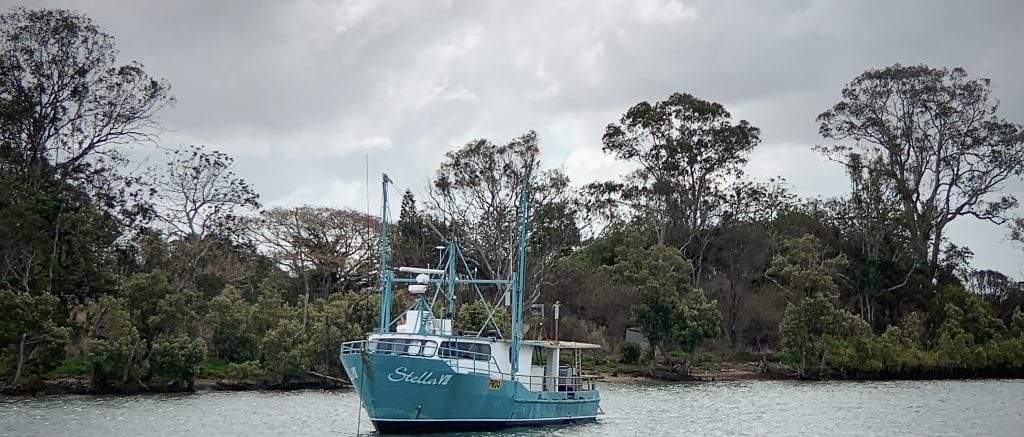
Do not touch the whales
There are laws in place to limit encounters between people and wildlife including whales. For example, see the Government of Canada (2020). Whales, sea otters, and countless other species depend on our respect and care. While marine wildlife can be curious and may approach boats, we urge everyone: look, and do not touch. Give these animals the space they need to flourish.

Human and Environmental Challenges
Together, we can foster peace, security, and respect for existing borders — not only across the Pacific but around the world. People, and whales, sea otters, and other wildlife are depending on us!
Four Key Concerns
Four significant challenges facing humanity and the environment are climate change, economic instability, geopolitical tensions, and health and well-being. The areas of trade, defence, and well-being may be interrelated. The importance of economies and workers’ rights cannot be overstated.
People have the right to be employed in safe workplaces. Notably, during the 12th century, quarantine laws were implemented to mitigate the spread of the plague from infected port. For further information, please refer to The Plague. Additionally, restrictions on shipping due to trespassing can have serious implications. A reduction or suspension of aid can lead to increased anxiety among individuals.
Examples of Economic Controls
Examples of financial controls include foreign interventions with research agreements. For instance, President Trump’s administration has been known to cancel or postpone funding, such as for universities (Duffy, 2025). It is important to note that funding may still be allocated, for instance, to Australia for groundbreaking research. Additionally, financial controls could incorporate raising the costs of pharmaceuticals, which ultimately weaken national programs and health initiatives (Crowley, 2025).
Economic changes can play a crucial role in promoting dialogue with emergent partners who appreciate critical and liberal inquiry, while also enhancing access to healthcare services, including medications.
FISCAL Controls as Punitive Measures
Economic controls can serve as punitive measures aimed at amplifying the impact of positional bargaining and posturing. Instead of fostering a collaborative sharing of power, these controls are often intended to dominate others to achieve specific objectives such as ill founded views about extreme protectionism. These measures often drive up costs to households for certain items (Editor, 2025a).
Tariff Roadblocks
The personal intersects with the political. Large-scale tariffs may be utilised to undermine the economies of nations like Canada, New Zealand, India, Australia, or other Commonwealth members (Bevan, 2025). 2.7 billion people reside in the Commonwealth (The Commonwealth, 2025). Mutual relationships could be strengthened through free trade, defence, and security measures.
Tariffs: An Australian Experience
Bevan (2025) referenced Gough Whitlam, a former Australian Prime Minister who served from 1972 to 1975. In 1975, a constitutional crisis led to a double dissolution of both houses of parliament. Governor General Kerr of Australia dismissed the Whitlam Labor Government (Blackshield & Williams, 2002; Clarke, et al., 2009).
Australia and Constitutional Monarchies
Countries such as Canada, Australia, and New Zealand are currently bound by their constitutions and the monarchy therein. In 1975, in Australia, monetary supply was obstructed and the then government did not have access to supply (Clarke, et al., 2009). Under ideal circumstances, the monarchy can serve as a check and balance against the misuse of authority and control.
Australia and Interconnected Supply Chains
Bevan (2025) elaborates on the ineffectiveness of strong tariff protection in Australia, demonstrating that it failed to yield positive outcomes and instead contributed to increased costs for certain household goods, such as on colour televisions, which became challengingly expensive. Bevan further suggested that isolationist policies, which fail to acknowledge the interconnectedness of global supply chains, also impose financial burdens on households. People under these circumstances struggle to allocate time and resources for relaxation, leisure activities, counselling and travel.
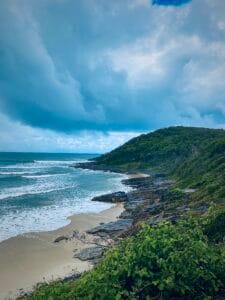
Exploring Aspects of Maritime Life: Global Supply Chains
Over 90% of international trade may be linked to the global maritime sector (Editor, 2020). According to Editor (2020), this industry is responsible for the annual transportation of goods valued at over USD 4 trillion. The United Nations Conference on Trade And Development (2024) estimated that about 80% of world trade is derived from maritime sources. Moreover, it is anticipated that the maritime sector will operate efficiently, ensure passengers’ and cargo safety, and remain profitable and sustainable (Editor, 2020).

Taking Stock: From Climate Change to Environmental Harm, Natural Resource Use
Challenges such as climate change, economic instability, geopolitical conflicts, and obstacles are becoming increasingly difficult to manage. Subsequently, higher maritime costs are transferring to consumers, resulting in rising household expenses. This often happens when production or operational costs increase, for example, due to inflation, supply chain issues, or higher wages. In turn, businesses raise the prices of goods and services, which directly impact household budgets and generally resource management.
The Gulf of Maine case in the 1980s between Canada and the United States is a fundamental example of how international law, particularly concerning environmental management and resource allocation, has a niche in managing conflicts between states.
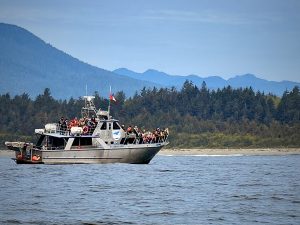
The Gulf of Maine Case
The conflict centred around the rights to fishing grounds in the Gulf of Maine, which were rich in precious fish stocks, ranging from cod to lobster (Brunnee, et al., 2006; Matthewman, 2021) Eventually, in 1984 a Chamber of the International Court of Justice heard this dispute. This case underscored important key principles in international law:
Environmental Harm and State Responsibility
In the Gulf of Main case, Canada and the United States, were interested in preserving and administering fish stocks, and transcending the possible environmental harm connected to overfishing. Under international law, states are required to prevent transboundary detriment, which in this case concerned the possible reduction of marine life. Overfishing, for instance, could negatively impact Canada’s and the United States’ industries and ecosystems.
Application of International Courts
The International Court of Justice (ICJ) offers a venue for managing these kinds of conflicts. Notably the ICJ’s role is mainly advisory; generally when hearing environmental disputes. The ICJ can mediate environmental conflicts. The ICJ plays a pivotal role in monitoring planetary frameworks concerning natural resources.
States have obligations under international law to limit the impact of climate change and optimise a healthy environment. Examples, of international law include the Kyoto Protocol, Paris Agreement, and the United Nations Framework Convention on Climate Change (International Court of Justice, 2025).
If states cause environmental harm to their neighbours then they may be liable for wrongful behaviour. Notwithstanding this, the International Court of Justice acts in an advisory capacity to planetary states.
Fishing Rights and the Law of the Sea
The Gulf of Maine conflict demonstrated the implementation of international agreements similar to the United Nations Convention on the Law of the Sea (UNCLOS), which oversees maritime borders, natural resource rights, and responsibilities, and environmental safeguards.
Conflict Management and Diplomacy
The Gulf of Maine conflict was an illustrative example of how essential diplomacy and generally dispute are pivotal in administering shared natural resources. The ICJ’s involvement was essential, and so are continuing discussions; between, for example, Canada and the United States, to reduce conflicts. Overall, the Gulf of Maine case demonstrated how international law can help to lessen or prevent conflicts involving natural resources.
Exploring Aspects of Maritime Life: Four Groupings of Human and Environmental Challenges

Challenges, for instance, in the Pacific region, include the next aspects.
Climate Change
Pacific island nations are facing rising sea levels, increasingly frequent and severe storms, and altered weather patterns. For example, read about Vanuatu and the disasters it experienced in 2004 and 2024 in a Resiliency Toolkit.
Environmental Changes
Environmental shifts give rise to direct risks to the health and safety of human populations. Additionally, they lead to human displacement, loss of livelihoods, and heightened health risks, including the proliferation of diseases associated with water and food security. Events like bomb cyclones can be daunting (Judd, 2024). These happenings remind us of the unpredictability of the environment. Have you experienced any such event, or are you thinking about environmental shifts?
While idyllic landscapes offer a sense of peace and stability, the sudden onset of such ferocious storms may drastically alter the environment, leaving destruction and change in their wake. Bomb cyclones, in particular, with their rapid drop in pressure and intense winds, may feel especially overwhelming. It can be as though, nature’s wild splendour and human forces both have periods where they assert their dominance. This could contribute to monetary uncertainty.
Economic Instability
Various Pacific nations heavily depend on fishing, tourism, and agriculture, all of which can be significantly affected by global economic fluctuations or disasters, whether human-made, natural, or hybrid. In the face of disasters, personal and social resilience can be fostered. Economic instability may exacerbate poverty, restrict access to healthcare, and increase susceptibility to geopolitical tensions.
Geopolitical Tensions
The Pacific region is emerging as a focal point for international geopolitical conflicts, involving such nations as Canada, Australia, New Zealand, Papua and New Guinea, Singapore, and China. These geopolitical factors have the potential to undermine human security, contributing to instability and conflict. Subsequently, this can hinder initiatives aimed at enhancing human and environmental health and safety. A Communique between Australia and Papua and New Guinea was established. Currently, this fell short of a Climate change also constitute international and national security arrangements (Bronskill, 2023).

Health and Well-Being
The interplay of climate change, economic uncertainty, and geopolitical tensions create significant challenges to human and environmental health. In some cases, such as in Vanuatu and the Pacific region generally, the current infrastructure and resources are inadequate to tackle these crises, putting the well-being of the population at risk. People, expect opportunities for free trade, defence and security, including in the Pacific region, and to have the means to cope with disasters.

Exploring Aspects of Maritime Life: Trade, Defence, And Security in the Pacific and Beyond
Business Sweden (n.d.) highlighted the Asia-Pacific region, indicating that global supply chains are facing disruptions, resulting in increased costs and heightened significance. It is essential to provide support to the Pacific to enhance its resilience and ability to tackle significant security challenges, as outlined in the 2018 Boe Declaration on Regional Security (Komai, 2018).
Countries like Australia, Canada, China, India, Indonesia, Japan, New Zealand, Singapore, South Korea, Sweden, and the United States, can be at the forefront of optimising free trade, human rights, and environmental stewardship in the Pacific region (Business Sweden, n.d.; Government of Canada, 2025a; Tyler, 2025). Check out the blogs about Human Rights and free trade at Revisiting Free Trade: Oh’ Canada.
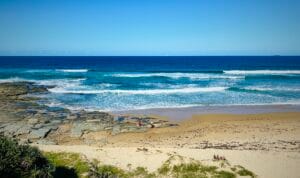
Australia: Helping Hands in the Pacific. A Potential Defence and Security Partner.
Australia has actively assisted Pacific nations by focusing on defence and security measures, disaster prevention and response, border management, and human security initiatives (Department of Foreign Affairs and Trade, n.d.). A family of nations capacity to achieve this is shaped by social and economic factors.
Geopolitical issues are complex and can change over time due to a variety of factors, such as diplomatic initiatives, fiscal constraints, and planetary co-operation. People may face challenges in sustaining open ports and maintaining strong global supply chains, particularly with heightened geopolitical tensions.
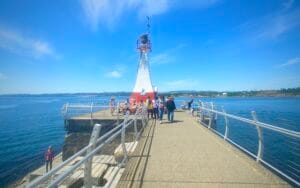
Geopolitical Tensions in Flux
President Trump’s administration has ushered in substantive differences in ideas, values, and beliefs, between the United States and its traditional allies (Australian Broadcasting Corporation News Breakfast, 2025; Editor, 2025a).
Canada and Optimising Diplomatic Relationships
Canada’s diplomatic connections with China date back to before the 1970s (Government of Canada, 2025b). Although tensions have periodically arisen between China and countries such as Australia and others (Grant, 2024), strong trading relationships, for example, have the potential to ease geopolitical conflicts (Hauser, 2025). Furthermore, long-term prospects for improved relations between China and the United States remain possible (World Economic Forum, 2025). If a truce between the United States and China was reached, generally agreements could gain positive momentum, contributing to greater peace and security.
China, as of February 2025 was the United Kingdom’s fifth most substantive trading partner (United Kingdom Parliament, 2025). However, legal challenges remain and will need to be addressed.. A family of nations potentially supports sustained diplomatic progress, upholding human rights and fundamental freedoms.
Emerging Legal Challenges
Democratic Representative Seth Magaziner worked towards introducing a private member’s bill to prevent President Trump from seizing territory from longstanding US allies, such as Canada, Greenland, and Panama (Editor, 2025a). Notably, no United States President in over a century has declared war on allied nations. President Trump’s administration appeared, for a time, to be targeting and sanctioning Canadian and additional long-standing allies’ economies. However, President Trump’s administration said that it would not sanction Canadian goods falling under the Canada-United States-Mexico Agreement (CUSMA) (Government of Canada, 2024a; Prime Minister of Canada, 2025).
Relationships Between Australia and China
On February 20, 2025, the Chinese government’s warships operated near the Australian coastline. Guilfoyle (2025) commented that Chinese government warships had travelled into Australia’s Exclusive Economic Zone. These Zones span around 200-nautical miles off the coast. Guilfoyle commented on these Exclusive Economic Zones under UNCLOS. Subsequently, on February 27th and 28th the Chinese government conducted live-fire maneuvers with limited notice given to impacted nations to maintain air safety.
There is a great need to broaden and build a family of nations facilitating peace and compassion across the planet. For example, in 2024 and 2025 members of the Australian Royal Airforce were seemingly exposed to Chinese government initiated flares. In response to tensions with China, the Australian defence force planned to develop anti-ship missiles (Lague, 2025). Additionally, Australia’s Bushmaster vehicles have been enhanced to enable them to be mobile, while identifying and neutralising attacking armed drones (Greene, 2025).

Strengthening A Family of Nations
Peoples’ attitudes and behaviours often change. Collaborative strategies among a family of nations can navigate complex dynamics that often revolve around limited possibilities, involving submission and control. Ideally, a state of homeostasis between dominance and submission would be attained; however, adjustments are often necessary to sustain a balance. Innovation and creativity can foster outcomes that benefit people and the planet. Read widely and consult various sources such as from Universities, Colleges, governments and media that monitor trends and events.
Necessity can indeed be the mother of invention! In democratic societies, most human interventions come with both benefits and drawbacks. What is particularly attractive in healthy democratic systems, is the ability for individuals to weigh the advantages and disadvantages of decisions and courses of action. Geopolitical challenges can foster enduring and sustainable alliances, while expanding and developing strategic instruments, such as diplomacy. In turn, this offers the potential to mitigate differentials in power and control between nations.
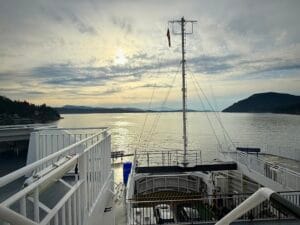
Australia, Canada, and the Pacific
This web page features copyrighted photos mainly drawn from Australia and Canada. They are both located within the expansive Pacific region, Australia is situated in the South Pacific, with its eastern coastline being directly adjacent to the Pacific Ocean. The country actively engages in matters, including trade, environmental matters, and geopolitical relations.
Canada is positioned along the northern Pacific coast, with British Columbia as its coastal province that faces the Pacific Ocean. Canada’s participation in the Pacific region includes trade and international relations. Despite the significant geographical distance separating them, both nations share mutual interests in the Pacific, particularly concerning trade routes and environmental issues, including ocean health, defence, and security.

Establishing a Partnership Between Commonwealth Countries
Canada has a longstanding partnership with Australia and they together with India, New Zealand, and others are members of the Commonwealth. Canada, Australia, and their allies can work together as a family of nations to improve deterrence capabilities while also advancing diplomatic efforts. Mediation, counselling, the arts, and support are consistent with diplomatic initiatives.
Australia and Canada A Continuing Partnership
In 2025, Canadian Prime Minister Mark Carney engaged in continued negotiations with Australian Prime Minister Anthony Albanese regarding the acquisition of a $6.5 billion missile defence system made in Australia (Editor, 2025b, Editor 2025c; Notion & Hazen, 2024).
There are various ways in which we can actively contribute to enhancing security and stability. For instance, we could engage in diplomatic efforts, implement balanced and humane economic controls, and seek guidance from international law and our allies.
In an article by O’Neill (2022) on CTV News, Canada’s then Defence Minister Anita Anand emphasised the importance of honouring and safeguarding our armed forces. As of March, 2025, Defence Minister Bill Blair indicated that Canada will be heightening its military presence in the Arctic and its Northern region (Government of Canada, 2025c).
Knight (2025) observes that in Australia, concerns emerge regarding the stability of the United States, particularly in its treatment of longstanding allies such as Canada and European nations.
The Pacific region generally experiences challenges due to the cessation of or diminishing assistance from Western countries, including the United States. Aid is aimed, for example, at health services, education, infrastructure, and climate resilience. Countries like China have expanded their efforts to meet funding shortfalls (Editor, 2024)

Canada and the Arctic
Canada seems to be particularly focused on the Arctic region and the infrastructure in Nunavut, especially as trade relations with the United States are being revisited. Currently, emphasis in defence spending is on the Canada and United States border, reaching into the Atlantic (Editor, 2025b). The Pacific Ocean region, which borders British Columbia, can also play a significant role in Canada’s trade, defence, security and environmental system (Government of Canada, 2024b).

Key principles for operating in maritime environments include the concept of innocent passage through international straits, as well as transit passage for vessels navigating these straits, and for aircraft flying over them during peacetime (UNCLOS, arts 38-40, 44-45; Harris, 2004). This entitlement allows merchant ships to maintain a swift and uninterrupted course through a channel that may be part of an Exclusive Economic Zone, or adjacent to the high seas, including military vessels (Brunnee, et al., 2006). However, claims to this right are not valid if there exists an alternative route available through the high seas. As countries face challenges in managing their finances within limited economic conditions, tensions and conflicts, including in the Pacific region, seem to be intensifying.
The Freezing of United States Aid to the Pacific
Pacific nations would benefit from having their aid reinstated, including from the United States, and tariffs abolished. For example, geopolitical instability in the Pacific region is expected to affect at least five U.S. states, as well as neighbouring Canada and Mexico (Tylor, 2025). Notably, Canada’s province of British Columbia borders the Pacific. People who have a stake in the Pacific have economic rights. However, this does not extend to breaching lawful commitments involving free trade, safety, security, and aid.

Exploring Aspects of Maritime Life: Economic Liberties
Economic liberties encompass the ability to implement specific fiscal measures subject to existing agreements. The term is employed from various viewpoints, including financial and philosophical perspectives. A diverse range of perspectives exist, encompassing liberal traditional views of the “invisible hand of the market”, private property ownership, and commercial self-regulation (Litinski, 2019; United Nations Educational, Scientific and Cultural Organization, 2018). Economies that rely on volunteer labour, as opposed to enslaved production, seem to place a high value on workers’ rights.
Exploring Aspects of Maritime Life: Worker Rights
Life on the Pacific calls for safety and security. One proactive approach to security involves hot pursuit while upholding nations’ lawfully recognised Exclusive Economic Zones. This approach can be a stepping stone to ensure the safety of maritime workers, other people, and the environment (Maritime Labour Convention, 2006).
Maritime Labour Convention
This convention establishes extensive global safeguards to uphold maritime workers’ rights, including fair work and proper living conditions. In turn, this can limit unfair competition and unsafe work conditions (International Labour Organization, 2022).
Maritime Workers
These workers may be defined thus, as people who range from the crews on vessels, to waterside workers, located at seaports and docks, to individuals who run equipment at inland transport hubs (Public Safety Canada, 2020; United States Department of Homeland Security, 2020).
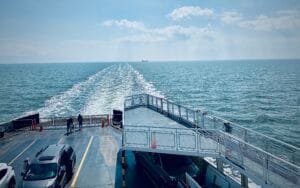
Exploring Aspects of Maritime Life: Hot Pursuit
Life on the Pacific and Atlantic Oceans can be thrilling and dangerous. A ship’s crew and the vessel’s safety should not be undermined when pursued on waterways. The process of hot pursuit may range from least to maximum interventions to have a ship stop its transit. Examples of preventative interventions are when ships transmit internationally agreed audiovisual communications, or fire shots for a boat to stop, using force such as sinking a vessel as a measure of last resort (Harris, 2004). It is problematic when ships’ signals are disrupted, for example, by cybersecurity breaches that undermine peoples’ safety and security.
Dynamic Maritime Supply Chains
The dynamic nature of maritime supply chains is pivotal to the global economy, including not only the transportation of goods, but also access to services and vital information. Maritime workers play a key role in keeping these supply chains operational, often facing significant risks, such as human, environmental, or logistical. Ensuring safe and secure maritime routes is essential for minimising geopolitical tensions, while making efforts to ensure that maritime chains are stable and resilient.
Individual Differences
Acknowledging individual’s unique experiences, viewpoints, and hopes is essential. Although the primary objectives of efficiency, safety, and security are pivotal, they must also correspond with the needs, welfare, rights, and voices of those directly influenced by maritime activities.
Building Bonds in the Midst of Adversity
In February 2025, aircraft needed to remain vigilant for live fire from Chinese government vessels; during their military exercises (Wong & Atkinson, 2025). However, it is crucial to recognise current geopolitical circumstances are often not permanent and can be in flux. For example, partnerships in the making, could extend beyond Australia and Taiwan to include Canada, Mexico, India, New Zealand, other members of the Commonwealth, China, and additional nations.
It is essential to uphold and reinforce sovereign rights over land, air, and sea. The delineation of the world’s borders should not be determined by tyrants who disregard human rights and fundamental freedoms. Acknowledging these principles is crucial for the effectiveness and sustainability of maritime life, which, in turn, supports the unity of an emergent family of nations.
In Closing
This blog post has considered aspects of maritime life, including the Pacific region and has provided an overview of the following topics:
- Human and environmental challenges;
- Trade, defence, and security matters;
- Economic liberties; and;
- How to contact us.
References
A-B
Australian Broadcasting Corporation News Breakfast (2025, March 17). ‘Madness’: US congressman says there’s ‘no logic’ to Trump’s tariffs on Australia. [Video]. ABC.
https://www.abc.net.au/news/2025-03-18/madness:-us-congressman-says-theres-no-logic-to/105064574
Bevan, M. (2025). Will Trump’s tariffs make America expensive again? Australian Broadcasting Corporation. [Video]. ABCIView.
https://www.abc.net.au/news/2025-02-01/will-trump-s-tariffs-make-america-expensive-again-/104884930
Blackshield, T. & Williams, G. (2002). Australian Constitutional Law and Theory. Commentary and Materials. (3rd ed.). Federation Press.
Bronskill, J. (2023, March 5). Climate change threatens Canadian security, prosperity, warns stark spy agency brief. CBC. The Canadian Broadcasting Corporation.
https://www.cbc.ca/news/politics/csis-climate-change-threats-canada-1.6768803
Brunnee, J., Currie, R., McDorman, T., DeMestral, A., Mickelson, K., Provost, R., Reif, L. & Toope, S. & Williams, S. (2006). International Law. Chiefly as Interpreted and Applied in Canada. Emond Montgomery.
Business Sweden (n.d.). Asia-Pacific. A Crucial Region for Future Growth.
https://www.business-sweden.com/expand-globally/markets/asia-pacific#
C-D
Clarke, J, Keyzer, P & Stellios, J. (2009). Hanks’ Australian Constitutional Law. Materials and Commentary. (8th ed.) Butterworths.
Coleridge, S. (1798). Rime of the Ancient Mariner.
The Commonwealth (2025). Member countries.
https://thecommonwealth.org/our-member-countries
Crowley, T. (2025, March 19). Australia defends Pharmaceutical Benefits Scheme as US companies urge Trump to impose reciprocal tariffs. ABC. Australian Broadcasting Corporation.
Department of Foreign Affairs and Trade (n.d.). The Pacific. Building a stronger and more united Pacific Family.
https://www.dfat.gov.au/geo/pacific
Duffy, C. (2025, March 19). Australian universities losing US funding amid Donald Trump’s ‘America First’ agenda. [Video]. ABC. Australian Broadcasting Corporation.
https://www.abc.net.au/news/2025-03-20/trump-america-first-policy-risking-australian-uni-research-funds/105072344
E-G
Editor (2020). Why Real-Time Data Matters to the Maritime Industry? International Business Magazine. https://intlbm.com/2020/12/04/why-real-time-data-matters-to-the-maritime-industry/
Editor (2024). China returns to Pacific with aid and influence push, report shows. Reuters.
Editor (2025a, March 11). U.S. congressman introduces bill to stop Trump from invading Canada. [Video]. CBC. Canadian Broadcasting Corporation.
https://www.cbc.ca/player/play/video/9.6681040
Editor (2025b, March 18). Canada to partner with Australia on early warning detection system in the Arctic. [Video]. CBC. Canadian Broadcasting Corporation.
https://www.cbc.ca/news/canada/north/canada-early-warning-detection-arctic-1.7486640
Editor (2025c, March 18). Anthony Albanese speaks with Canada’s new Prime Minister. [Video]. Sky News.
Government of Canada (2020, June 5). Frequently Asked Questions – Interim Order Respecting the Protection of Killer Whales (Orcinus orca) in the Waters of Southern British Columbia.
Government of Canada (2024a, July 22). Canada-United States-Mexico Agreement (CUSMA).
Government of Canada (2024b, September 3). Canada’s Indo-Pacific Strategy.
Government of Canada (2025a, January 7). Canada – Pacific Alliance Free Trade Agreement.
Government of Canada (2025b, March 19). Canada-China relations.
https://www.international.gc.ca/country-pays/china-chine/relations.aspx?lang=eng
Government of Canada (2025c, March 3). Minister Blair to make announcement regarding Canadian Armed Forces’ presence in the North.
Grant, W. (2024, June). Energy at the Crux of Australia-Taiwan Relations. ProQuest.
Greene, A. (2025). Hi-tech upgrade for Australia’s Bushmaster vehicles to counter growing drone threat. ABC. Australian Broadcasting Corporation.
https://www.abc.net.au/news/2025-03-23/bushmasters-upgrade-to-counter-growing-drone-threat/105086328
Guilfoyle, D. (2025, February 23). Have the Chinese warships off Australia’s coast broken any laws? Newsroom. University of New South Wales.
https://www.unsw.edu.au/newsroom/news/2025/02/have-the-chinese-warships-off-australia-s-coast-broken-any-laws
H-K
Harris, D.J. (2004). Cases and Materials on International Law. (6th ed.). Law Book.
Hauser, A. (2025, May 22). Open the Door and See the Mountain: Reflections from a Recent Trip to China. Reserve Bank of Australia. https://www.rba.gov.au/speeches/2025/sp-dg-2025-05-22.html
International Court of Justice (1984, October 12). Judgment of 12 October 1984.
https://www.icj-cij.org/case/67/judgments
International Court of Justice (2025, July 23). Obligations of States in Respect of Climate Change.
https://www.icj-cij.org/sites/default/files/case-related/187/187-20250723-adv-01-00-en.pdf
International Labour Organization (2022). Maritime Labour Convention, 2006.
https://www.ilo.org/global/standards/maritime-labour-convention/lang–en/index.htm
Judd, A. (2024, November 20). Bomb cyclone photos: Storm hits Vancouver Island. Global News. https://globalnews.ca/news/10880199/bomb-cyclone-photos-vancouver-island-storm/
K-O
Knight, B. (2025, March 21). These are your questions about the future of AUKUS with Donald Trump back in the White House. ABC. Australian Broadcasting Corporation.
https://www.abc.net.au/news/2025-03-22/aukus-trump-submarines-deal-aus-security-defence/105074046
Komai, M. (2018, September 6). Pacific Leaders endorse new security deal. Radio New Zealand.
https://www.rnz.co.nz/international/pacific-news/365842/pacific-leaders-endorse-new-security-deal
Lague, D. (2025, March 13). Australia moves to arm troops with anti-ship missiles as China threat looms. Reuters.
Litinski, R. (2019). Economic Rights: Are They Justiciable, and Should They Be?
American Bar Association.
Maggioni, F; Pujo-Pay, M.; Aucan, J.; Cerrano, Carlo; C., Calcinai, B., Payri, C., Benzoni, F, Letourneur, Y. & Rodolfo-Metalpa, R.. The Bouraké semi-enclosed lagoon (New Caledonia) – a natural laboratory to study the lifelong adaptation of a coral reef ecosystem to extreme environmental conditions. European Geosciences Union.
https://bg.copernicus.org/articles/18/5117/2021/
Maritime Labour Convention (2006).(entered into force on 20 Aug. 2013).
Matthewman, R. (2021). The Association of Diplomatic Studies and Training Foreign Affairs. Oral History Project.
Notzon, N. & Hazen, D. (2024, November 28). New partnership between Australia and Canada to counter missile threat. [Video]. ABC. Australian Broadcasting Corporation.
https://www.abc.net.au/listen/programs/radionational-drive/1640/104666478
O’Neill, N. (2022). Defence minister says Canada’s military is ‘top priority’ amid worries about ‘darker’ world. CTV. Canadian Television Network.
P-W
Posner, E.A. (2014). The Twilight of Human Rights Law. Oxford University.
Prime Minister of Canada (2025, August 22). Statement by the Prime Minister on CAN-U.S. trade.
https://www.pm.gc.ca/en/news/statements/2025/08/22/statement-prime-minister-can-us
Public Safety Canada (2020). Guidance on Essential Services and Functions in Canada During the COVID-19 Pandemic.
https://www.publicsafety.gc.ca/cnt/ntnl-scrt/crtcl-nfrstrctr/esf-sfe-en.aspx
T-U
Thornton, H. (2004). Hugo Grotius and the Freedom of the Seas. International Maritime History Association.
https://doi.org/10.1177/084387140401600203
Tyler, M. (2025, February 5). In Freezing Foreign Aid, the US Leaves People to Die – and Allows China to Come to the Rescue. The Diplomat.
Transportation Safety Board of Canada (2025). TSB Recommendation M18-01. Fatigue education and awareness training for watchkeepers.
https://www.tsb.gc.ca/eng/recommandations-recommendations/marine/2018/rec-m1801.html
United Kingdom Parliament (2025, February 11). The UK and China relationship.
https://post.parliament.uk/the-uk-and-china-relationship/
United Nations Educational, Scientific and Cultural Organization (2018). Economic and social rights. Courier. https://en.unesco.org/courier/2018-4/economic-and-social-rights
United Nations Convention on the Law of the Sea (entered into force on 14 November 1994).
https://legal.un.org/avl/ha/uncls/uncls.html
United Nations United Nations Conference on Trade And Development (2024). Review of Maritime Transport 2024. Navigating maritime chokepoints.
https://unctad.org/publication/review-maritime-transport-2024
United States Department of Homeland Security (2020). Memorandum on Identification of Essential Critical Infrastructure Workers During COVID-19 Response.
Wong, T. & Atkinson, S. (2025, February 21). Planes diverted as China conducts rare military drill near Australia. BBC. British Broadcasting Corporation.
https://www.bbc.com/news/articles/clydv58l57do
World Economic Forum (2025, June 17). US-China trade framework agreed and other international trade stories to know this month.